How to Clean Home Windows Without Streaks
Cleaning your windows is an important part of keeping your home looking clean, but getting truly streak-free glass can be harder than it looks. Dirt, pollen, hard-water deposits, fingerprints, and moisture can all leave windows looking cloudy even after cleaning.
If you’re wondering how to clean home windows, the best approach depends on the type of window, the condition of the glass, and whether you’re cleaning the inside, outside, frames, or tracks.
For homeowners in Columbia, MO, seasonal pollen, humidity, rain, and winter weather can make exterior windows particularly challenging. The good news is that you don’t need complicated cleaning hacks or harsh chemicals to get better results.
This guide explains how to clean home windows inside and outside, which tools to use, how to avoid streaks, and when professional window cleaning makes more sense.
Tools You Need to Clean Home Windows
Having the right tools makes window cleaning faster and helps reduce streaks and residue. For most residential windows, you’ll need:
- Mild dish soap
- White vinegar
- Warm water
- Lint-free microfiber cloths
- A window scrubber or washer
- A quality squeegee
- A soft brush or old toothbrush for tracks
- A vacuum with a brush attachment
- Two buckets for washing and rinsing
- A clean, dry towel for edges and frames
- An extension pole for reachable exterior windows
- A garden hose for suitable ground-level exterior windows
A ladder may be necessary for some exterior windows, but working from a ladder can create a fall risk. If a window cannot be reached safely from the ground or with an appropriate extension pole, professional window cleaning is the safer option.
How to Clean Home Windows Inside and Outside
Once you have your supplies ready, work systematically rather than trying to clean several windows at once. Cleaning the frames and tracks first prevents loose dirt from ending up on freshly cleaned glass.
Step 1: Remove Loose Dirt and Dust
Start by removing loose dirt from the window frame, sill, and tracks. Use a vacuum with a brush attachment or a dry microfiber cloth to collect dust and debris. For narrow tracks and corners, a soft brush or toothbrush can help loosen buildup.
Do this before applying any liquid cleaner. Otherwise, dry dirt can turn into muddy residue that is harder to remove.
Step 2: Clean the Window Tracks and Frames
Window tracks often collect dirt, pollen, dead insects, and other debris. Vacuum the loose material first. Then use a damp microfiber cloth or soft brush to remove remaining grime. For stubborn buildup, a small amount of mild soapy water can help.
Avoid soaking wooden frames or allowing water to sit around seals and hardware. Wipe the area dry when you’re finished.
For mineral deposits in tracks or on compatible surfaces, diluted white vinegar can help loosen the buildup. Don’t combine vinegar with other household cleaners, particularly bleach-based products.
Step 3: Prepare a Simple Window Cleaning Solution
You don’t need a complicated homemade formula to clean most residential windows.
A simple solution is:
- Warm water
- A small amount of mild dish soap
Use only a small amount of soap. Too much can leave a film behind and make streaks more noticeable.
For certain mineral deposits, diluted white vinegar can also be useful. However, always consider the manufacturer’s care instructions for tinted, coated, or specialty glass before using vinegar or any other cleaning product.
Step 4: Wash the Glass
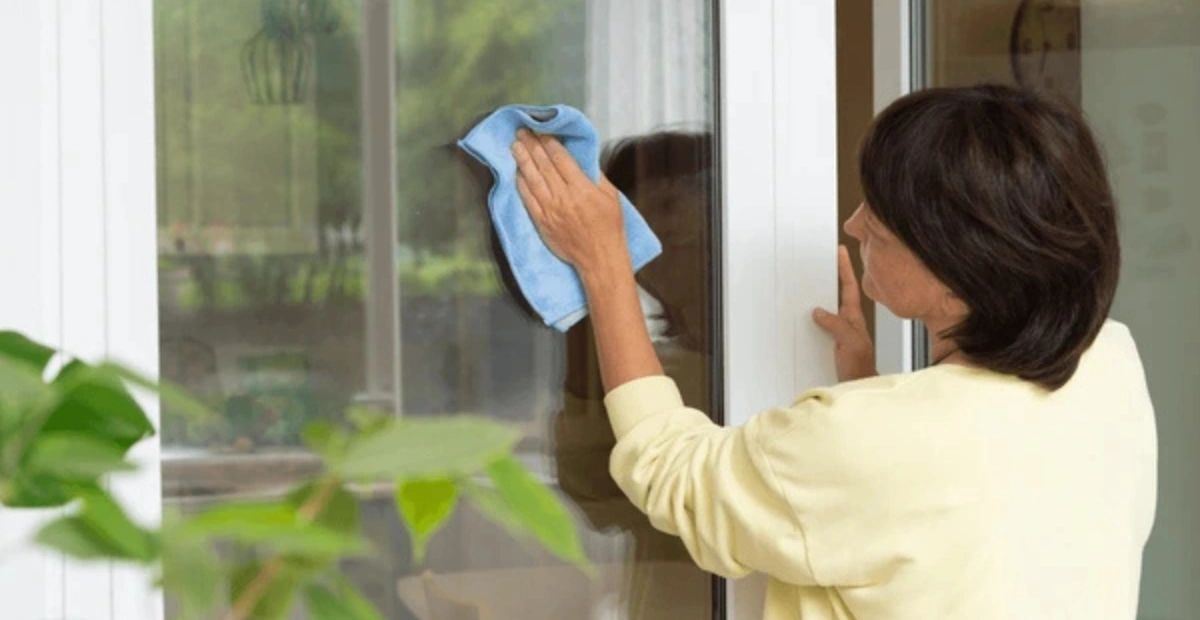
Apply the cleaning solution with a soft window washer or microfiber cloth. Work from the top of the glass toward the bottom and make sure the entire pane is covered. For heavily soiled windows, allow the solution a short time to loosen the dirt rather than immediately scrubbing aggressively.
Avoid cleaning windows in direct, intense sunlight. The solution can dry too quickly, making streaks and residue more difficult to remove.
Step 5: Use a Squeegee for a Streak-Free Finish
A squeegee is one of the most useful tools for achieving streak-free windows. Start at the top of the pane and pull the squeegee downward in overlapping passes. Wipe the squeegee blade with a clean cloth between passes so you’re not spreading dirty water back across the glass.
For smaller panes, you can also use horizontal passes if that feels easier. Once the main surface is finished, use a clean microfiber cloth to wipe the edges and corners where water may remain.
Step 6: Clean the Window Screens
Dirty screens can put dust and pollen back onto clean glass. Remove the screens carefully and use a soft brush or vacuum to remove loose debris. If the manufacturer’s instructions allow it, rinse them gently with water and let them dry completely before reinstalling them.
Don’t reinstall wet screens against freshly cleaned windows.
Step 7: Clean the Exterior Glass Safely
Ground-level exterior windows can often be cleaned with a hose, window-cleaning solution, or extension pole equipped with a washer and squeegee. For windows that tilt inward, such as many double-hung windows, follow the manufacturer’s instructions to tilt the sash safely and clean both sides from inside.
For fixed, casement, picture, or upper-story windows that cannot be reached safely, don’t lean out of a window or use an unstable ladder simply to clean the glass.
If you can’t reach an exterior window safely, professional window cleaning is the better option.
Window Cleaning Tips for Columbia Homeowners
Columbia homes experience seasonal conditions that can affect how quickly windows become dirty.
Dealing With Pollen and Outdoor Dirt
Pollen can leave a noticeable film on exterior glass, particularly during periods of heavy seasonal pollen. Remove loose pollen and dust before applying liquid cleaner. Otherwise, you may simply spread the debris across the glass.
A soft microfiber cloth or brush can remove loose material without unnecessarily scratching the surface.
Removing Hard-Water Stains
Hard-water deposits can leave white or cloudy mineral spots on glass, especially around windows exposed to sprinklers, rain runoff, or other mineral-rich water.
Diluted white vinegar can help with some mineral deposits. Apply it carefully, allow it to work briefly, and wipe the area clean. For severe or long-standing mineral buildup, household vinegar may not be enough. Avoid aggressive scraping or abrasive products that can scratch glass.
Cleaning Windows During Cold Weather
Winter window cleaning requires extra care in Columbia. Avoid pouring hot water onto cold glass. A sudden temperature change can create thermal stress and potentially damage the glass.
If exterior cleaning is necessary during cold weather, use an appropriate cleaning solution and work when temperatures are suitable. Make sure water is removed from the glass and surrounding areas so it doesn’t freeze.
For extensive exterior cleaning during freezing conditions, waiting for safer weather is usually the better option.
Common Home Window Cleaning Mistakes
Avoiding a few common mistakes can make a significant difference in your results.
- Using too much soap: Excess soap can leave a film and create streaks.
- Cleaning in direct sunlight: The solution can dry before you squeegee it away.
- Using abrasive materials: Steel wool, rough scrubbers, and abrasive cleaners can scratch glass or damage finishes.
- Using the wrong cleaner: Tinted or specialty windows may require specific products.
- Ignoring the frames and tracks: Dirt from these areas can end up back on the glass.
- Using a dirty squeegee blade: A dirty or damaged blade can leave streaks.
- Reusing dirty water: Dirty water simply transfers grime from one window to another.
- Using excessive pressure: Scrubbing aggressively isn’t necessary for ordinary window dirt and can damage certain surfaces.
- Taking unnecessary ladder risks: Hard-to-reach windows are better handled with proper equipment or by professionals.
How to Clean Different Types of Home Windows
Not every window operates or cleans in exactly the same way.
Double-Hung Windows
Many double-hung windows are designed so the sashes tilt inward for easier cleaning. Follow the manufacturer’s instructions rather than forcing the window mechanism.
Casement Windows
Casement windows are hinged and generally open outward. Depending on their design and location, the exterior may require an extension pole or professional equipment to clean safely.
Sliding Windows
Sliding windows usually have removable or accessible panels, but the exact cleaning process varies by manufacturer. Remove panels only if they’re designed to be removed safely.
Picture Windows
Large fixed picture windows can be difficult to reach from the outside, especially on upper floors. Extension poles may work for some locations, but inaccessible windows should be professionally cleaned rather than reached through unsafe positioning.
When to Hire Professional Window Cleaners
DIY window cleaning works well when the glass is easy to reach and the buildup is relatively light.
Professional window cleaning becomes more useful when:
- Exterior windows are on upper stories
- Windows are large or difficult to access
- Hard-water deposits have become severe
- Screens, tracks, and frames need detailed cleaning
- You have a large number of windows
- You don’t have the appropriate equipment
- You don’t feel comfortable working from a ladder
Professional cleaners can also help reduce the risk of accidental damage that can occur when the wrong tools or cleaning methods are used.
How Often Should You Clean Home Windows in Columbia, MO?
There isn’t one schedule that works for every home. For many Columbia homeowners, cleaning windows once or twice a year is a reasonable starting point. Homes exposed to heavy pollen, dust, trees, rain, or other outdoor debris may need more frequent cleaning.
You may also want to clean interior glass when fingerprints, dust, and household buildup become noticeable.
Rather than following a rigid schedule, inspect your windows regularly. If the glass looks cloudy, has visible buildup, or is reducing the appearance of your home, it’s probably time for a cleaning.
Bottom Line
Knowing how to clean home windows is mostly about using the right tools, the right amount of cleaning solution, and the right technique for the type of glass and window.
Start by removing loose dirt, clean the frames and tracks, wash the glass with a mild solution, and use a clean squeegee to remove the water. Avoid abrasive materials, excessive soap, unsafe ladder use, and harsh cleaning methods that could damage specialty glass or window frames.
For ground-level windows and manageable DIY jobs, these steps can produce a noticeable improvement. But large, upper-story, or difficult-to-reach windows are a different situation.
If your Columbia home has windows that are difficult to access or need more thorough exterior cleaning, Sentra Exteriors provides professional window cleaning services to help keep your home’s glass looking clean and well maintained.
Call (660) 853-2860 to discuss your residential window cleaning needs.