How to Clean Storm Windows: With or Without Removal

Many homes across Boone County, especially older ranch-style and traditional homes, rely on storm windows. These additional units not only protect their original single-pane or double-pane windows but also boost insulation and weather protection without much hassle.
However, storm windows only work well when they are clean. But Colombian homeowners face challenges in the form of pollen, humidity, storms, and seasonal grime buildup. What actually causes that buildup is the first step to cleaning it right. Here, explore complete guidelines on how to clean storm windows yourself, along with common factors behind that fast buildup.
Why Missouri Homeowners Frequently Clean Storm Windows
Many Missouri homeowners complain that their storm windows require more frequent cleaning. The local environmental conditions cause dirt, pollen, and mold to build up quickly. Here are the following reasons:
High Humidity
Apart from rainfall, the humid subtropical climate of Boone County and its surrounding areas increases the risk of mold growth. Summer nights are mostly more humid, creating ideal conditions for mold.
Rainfall
Columbia has an annual rainfall of 35.27 inches. It has a peak rainy season during April and May. After each rainfall, water mixes with dirt and pollutants, turning into sticky layers on window screens.
Prolonged Pollen Season
Columbia’s pollen season is longer than before. It begins with tree pollen in spring. You suffer from grass pollen in summer. Fall is accompanied by weed pollen. Pollens get trapped around window sills, particularly along sealed edges and tracks. They reduce indoor air quality and worsen respiratory issues.
Want to get rid of cloudy storm windows without much hassle? Call Sentra Exteriors for professional storm window cleaning services.
Steps to Clean Storm Windows By Yourself
As storm windows are add-on units mounted on existing windows, they are removable. Some minor cleaning can be done without removal, but for deep cleaning, we recommend removing them. The gaps between the primary and storm windows can trap moisture, debris, and dirt. So
1. Initial Inspection
Cracks, broken frames, or moisture damage need repair. Cleaning solutions or a squeegee can worsen cracks or moisture damage.
So, look for cracks in the seals, glass, or track channels. You can identify moisture damage by checking for soft wooden frames.
2. Preparations
After you are sure there are no repair needs, the cleaning session is the only requirement. Gather the right tools and products. You may need the following for this DIY cleanup:
- Any mild dishwashing detergent to add to water.
- Vinegar for stubborn mineral stains.
- A spray bottle for small gaps and window inserts.
- A squeegee
- Microfiber cloths
- A soft-bristle brush
- A steam cleaner for mildew (optional)
3. Remove the Storm Windows
Removable storm windows are easier to clean. This is because you can reach both the interior and exterior surfaces easily. You first need to locate the lift tabs, latches, or release mechanisms before removing such windows. The storm window may tilt inward or lift out of the frame. It all depends on the particular style of the window.
Just make sure to mark the left and right sides with masking tape before starting the removal process. Swapping the sides on reinstallation can create gaps.
4. Start with Dry Cleaning
Remove any loose dirt from the window screens or their seals with a brush. Brushing will prevent scratches and make the further cleaning steps easier and quicker. You can use a dry microfiber cloth as well to thoroughly remove loose particles. If available, use a vacuum to clean the corners and edges.
5. Use of Cleaning Solution
Prepare two solutions for thorough cleaning. Prepare one with vinegar and water and use both in equal proportion. Add a few drops of dish soap to water for general stains.
A vinegar solution works best for stubborn stains after rainfall. Likewise, a dish soap solution works well for grime and debris. Apply a moderate amount to avoid moisture damage.
You can clean mildew from crevices and tiny gaps by using a steam cleaner. It kills mildew and significantly improves indoor air quality.
6. Scrubbing and Rinsing the Glass
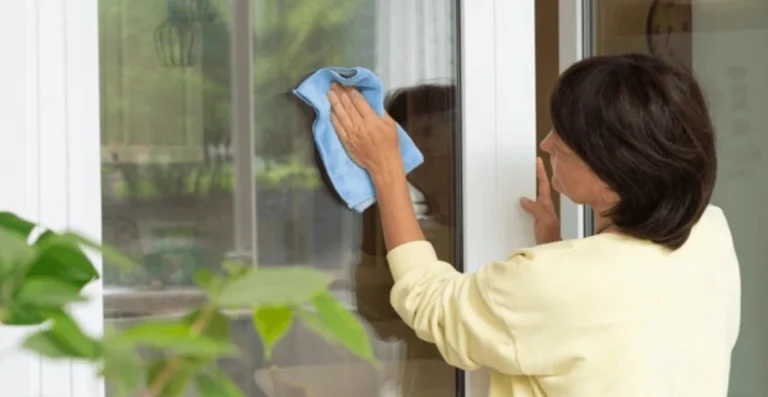
Use a microfiber cloth and scrub the glass in circular motions. This step removes sticky particles and grime. Rinse or use a squeegee to remove the extra water without causing streaks.
7. Reinstallation
Reinstall the windows correctly. Check their alignment and make sure the seals remain intact. Remember, a perfectly installed storm window closes fully. If it does not, it is not sealing properly against the primary window and is not providing the required insulation or protection. So, check for these issues during reinstallation.
How to Clean Storm Windows Without Removal
You can also clean storm windows without removal by accessing the internal and external sides separately. Use a ladder to reach the exterior of upper windows. For the interior side, follow the above steps as they are. Start with brushing, then soapy water, and rinsing through the gap between the storm window and the primary window.
Some fitted storm windows can be tilted slightly inward from the top. Clean the inner face of the storm pane and the outer face of the primary window in this position. Use a steamer to reach the corners and edges of the window screens, and then use a dry cloth afterward.
Remember, you cannot clean the moisture trapped between the single or double panes of storm windows and the primary window without removal. This occurs with broken seals that need repair.
Things to Avoid During Storm Window Cleaning
In a DIY project, not every general treatment or method is suitable for storm windows. You need to take care of the following:
- Don’t use steel abrasives on the window screen. They can cause permanent scratches
- Avoid using too much water. It can cause moisture to collect inside the tracks and seals.
- Never use cleaners containing ammonia on tinted glass.
- Avoid bleach or other harsh chemicals on aluminum windows.
- Don’t use paper towels, as they can leave lint on glass.
- Avoid newspapers. This is because they can cause ink smudges on glass panes.
- Never apply a cleaning solution directly to pollen. Also, use a dry brush first.
- Avoid cleaning during extreme cold or use an antifreeze agent, such as rubbing alcohol, in your cleaning solution if necessary.
Bottom Line
How to clean storm windows is something every homeowner should know. Just follow the above steps at least twice a year for their stain-free aesthetics and functionality. However, if the grime, dirt, or mildew is too much to handle by yourself, go for professional help.
Call (660) 853-2860 for a free quote on professional storm window cleaning services across Columbia and other neighborhoods in Missouri. Based on Boone County’s environmental conditions, Sentra Exteriors uses the best cleaning methods and equipment to leave your home with spotless, germ-free windows.